Christian tradition in the Welsh Province has a long history. Two of the early saints – Alban and Julian – were from Caerleon, probably martyred there in the third century. And Christianity continued to spread during the rest of the Roman occupation until the Legions withdrew at the beginning of the fifth century. As the east of Britain became subject to the Anglo Saxon invasion, Wales remained Christian. This was a time of noted preachers and teachers and holy men - Teilo, Dyfrig and Illtyd and many others.
When St Augustine was sent to convert the pagan English at the beginning of the sixth century, he met the British Bishops and Abbots and made demands for change on the Welsh Church which created differences which were not resolved for over 150 years.
With the arrival of the Normans in the eleventh century, four Welsh dioceses – St David’s, Bangor, Llandaff and St Asaph - were created, with Bishops appointed. Monasteries continued to be founded by religious orders – Cistercian, Franciscan and Dominican – and flourished until their dissolution by Henry VIII. Wales became part of England and the four dioceses part of the new Church of England with the king as its supreme head.
Faced with persecution and deprivation, the Old Faith struggled to survive in Wales. Refusal to attend the new services brought fines and imprisonment to the gentry. Missionary priests returning to Wales were hunted down, imprisoned and sentenced to death. Fewer priests meant less access to worship. Yet on some large estates maintained by courageous families, chaplains were sheltered, often in hiding, so that the Mass could be celebrated.
In 1829 most of the penal restrictions on Catholics were abolished.
From 1688 the Holy See had appointed Vicars Apostolic to the Western District which included Wales and Herefordshire. In 1840 Herefordshire, Monmouthshire and Wales became the Welsh District. In 1850 with the diocese of Newport and Menevia was created as a suffragan see of Westminster, with a Bishop in charge. In 1895 the Newport diocese was defined as including Glamorgan, Monmouth and Hereford: a Vicar Apostolic was responsible for the remaining territory until 1898, when it became the diocese of Menevia, with its own suffragan Bishop.
In 1916 the Cardiff Province was established, with the Metropolitan Archdiocese of Cardiff and Menevia as its suffragan see.
In 1987 Pope John Paul II established by decree the new Diocese of Wrexham formed by the restructuring of the Diocese of Menevia. The previous Bishop of Menevia, Rt Rev James Hannigan, was translated to the new diocese, and the Rt Rev Daniel Mullins became Bishop of the ‘new’ Menevia.
When St Augustine was sent to convert the pagan English at the beginning of the sixth century, he met the British Bishops and Abbots and made demands for change on the Welsh Church which created differences which were not resolved for over 150 years.
With the arrival of the Normans in the eleventh century, four Welsh dioceses – St David’s, Bangor, Llandaff and St Asaph - were created, with Bishops appointed. Monasteries continued to be founded by religious orders – Cistercian, Franciscan and Dominican – and flourished until their dissolution by Henry VIII. Wales became part of England and the four dioceses part of the new Church of England with the king as its supreme head.
Faced with persecution and deprivation, the Old Faith struggled to survive in Wales. Refusal to attend the new services brought fines and imprisonment to the gentry. Missionary priests returning to Wales were hunted down, imprisoned and sentenced to death. Fewer priests meant less access to worship. Yet on some large estates maintained by courageous families, chaplains were sheltered, often in hiding, so that the Mass could be celebrated.
In 1829 most of the penal restrictions on Catholics were abolished.
From 1688 the Holy See had appointed Vicars Apostolic to the Western District which included Wales and Herefordshire. In 1840 Herefordshire, Monmouthshire and Wales became the Welsh District. In 1850 with the diocese of Newport and Menevia was created as a suffragan see of Westminster, with a Bishop in charge. In 1895 the Newport diocese was defined as including Glamorgan, Monmouth and Hereford: a Vicar Apostolic was responsible for the remaining territory until 1898, when it became the diocese of Menevia, with its own suffragan Bishop.
In 1916 the Cardiff Province was established, with the Metropolitan Archdiocese of Cardiff and Menevia as its suffragan see.
In 1987 Pope John Paul II established by decree the new Diocese of Wrexham formed by the restructuring of the Diocese of Menevia. The previous Bishop of Menevia, Rt Rev James Hannigan, was translated to the new diocese, and the Rt Rev Daniel Mullins became Bishop of the ‘new’ Menevia.

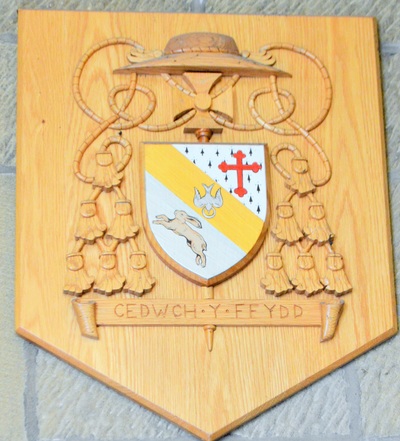
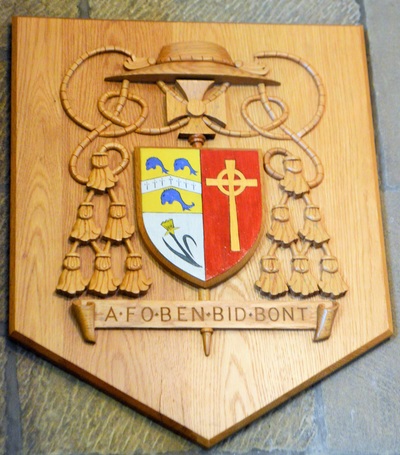
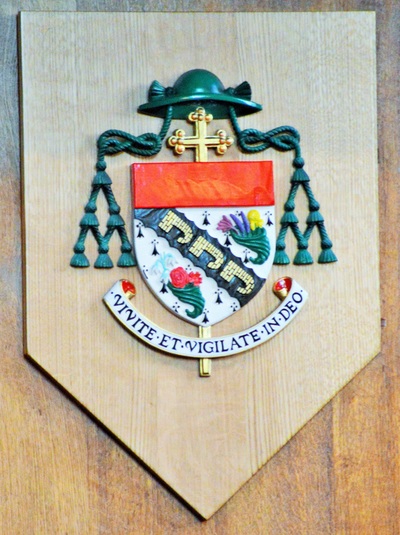
|
The Rt Rev James Hannigan (1987 - 1994)
1st Bishop of Wrexham |
The Rt Rev Edwin Regan (1994 - 2012)
2nd Bishop of Wrexham |
The Rt Rev Peter Brignall (2012 - Present)
3rd Bishop of Wrexham |